I've seen many customers struggle with traditional weed control methods that are labor-intensive and imprecise. The results are often disappointing and the process is frustrating.
Scotts Turf Builder Weed & Feed is a dual-action lawn care product that kills weeds while feeding and strengthening your grass. It works best when applied to wet grass in spring or early summer when weeds are actively growing.
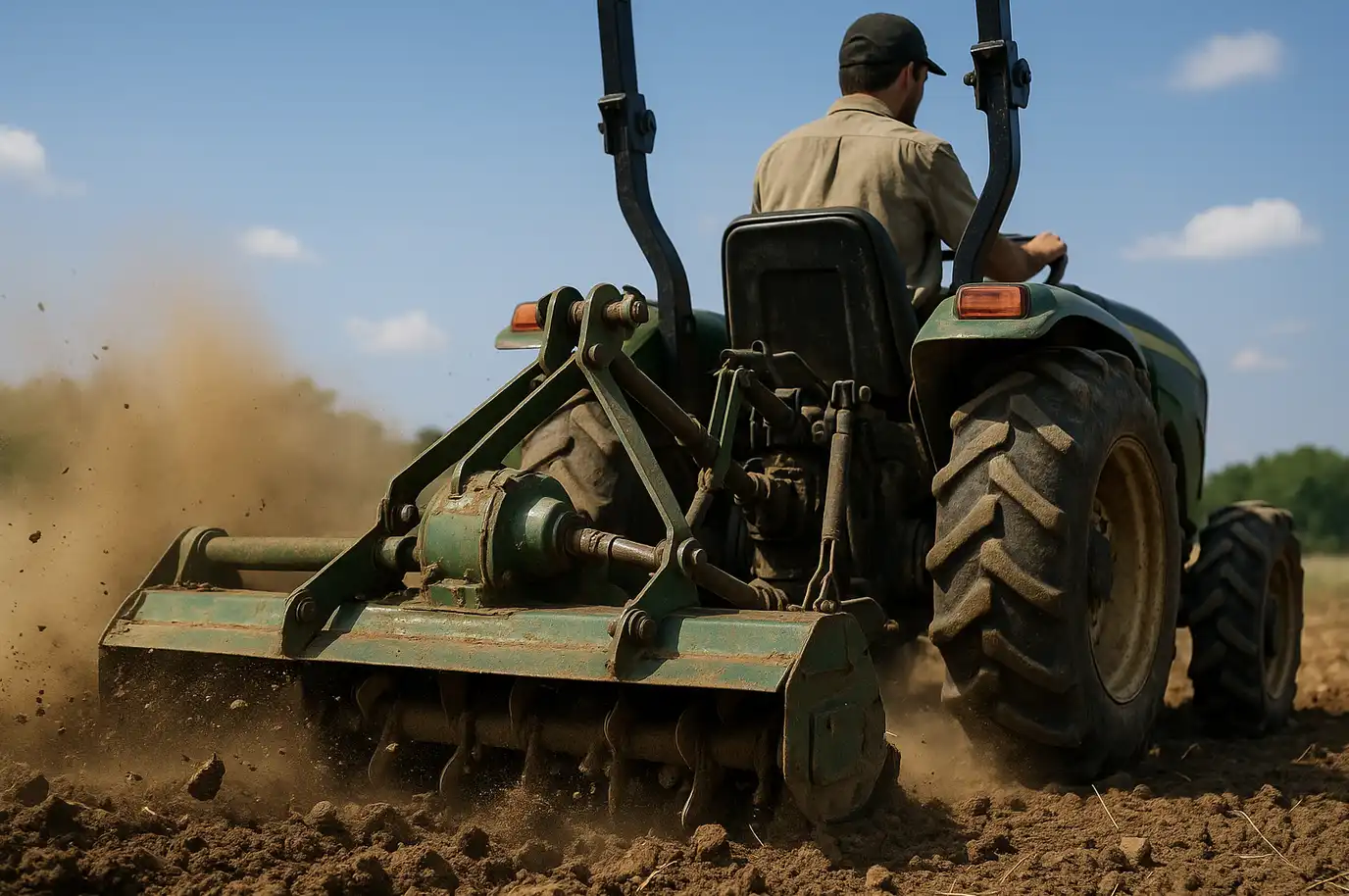
As someone who has worked with lawn care equipment manufacturers for over 12 years, I've witnessed the evolution of weed control technology. The industry has come a long way from basic tools to smart, automated solutions. Let me share what I've learned about modern weed control approaches.
How is traditional weed control evolving with new technology?
The old manual weed control methods are time-consuming and require significant skill. Many of my customers report inconsistent results and operator fatigue with traditional equipment.
Modern weed control is shifting toward battery-powered equipment with GPS precision guidance. These smart systems can automatically navigate and target weeds with minimal human input, dramatically improving accuracy and efficiency.
The transformation in weed control technology has been remarkable. I recently worked with a UK client who specifically requested lithium battery-powered equipment instead of diesel engines, citing environmental concerns. This reflects a broader industry shift toward sustainable solutions. The latest systems feature built-in computers with GPS positioning that eliminate the need for manual handle controls.
Traditional handle-operated equipment requires extensive operator training and skill. Even experienced users struggle to maintain consistent coverage and precision. This led my clients to request development of GPS-guided systems that could operate with minimal human input. The automated approach has significantly improved weed control accuracy.
Key Benefits of Smart Weed Control Systems:
| Feature | Benefit |
|---|---|
| GPS Guidance | Precise coverage without overlaps or missed spots |
| Battery Power | Environmentally friendly, quiet operation |
| Automated Control | Reduced operator skill requirements |
| Smart Programming | Optimized treatment patterns and timing |
| Data Collection | Track and improve performance over time |
What makes modern weed control more efficient?
Past experiences with traditional equipment showed clear limitations in coverage consistency and operator endurance. This created a strong need for more automated solutions.
Modern weed control equipment uses advanced sensors and programming to ensure uniform coverage while reducing human error. The systems can work continuously without operator fatigue and maintain precise application patterns.

The efficiency gains from modern weed control technology are substantial. Based on my experience working with manufacturers in Shandong province, which is China's main hub for agricultural equipment production, I've seen remarkable advances in both hardware and software capabilities. The latest systems combine robust mechanical design with sophisticated control algorithms.
The evolution from traditional diesel engines to lithium battery power systems represents more than just an environmental improvement. Battery-powered equipment offers more precise control over operation, enabling features like variable speed control and power optimization. The computer control systems can adjust performance based on conditions like terrain and weed density.
Comparing Traditional vs Modern Systems:
| Aspect | Traditional Equipment | Modern Smart Systems |
|---|---|---|
| Power Source | Diesel/Gas engines | Lithium batteries |
| Control Method | Manual handles | GPS/Computer guided |
| Precision | Operator dependent | Consistently accurate |
| Learning Curve | Steep | Minimal training needed |
| Environmental Impact | High emissions | Zero emissions |
Conclusion
Modern weed control has evolved from manual, skill-dependent methods to smart, automated systems that offer superior precision and efficiency while being environmentally friendly. The future of lawn care is clearly moving toward intelligent, sustainable solutions.